

Finding focus: start with the work environment
{P}rescription #113 - 9 May 2026

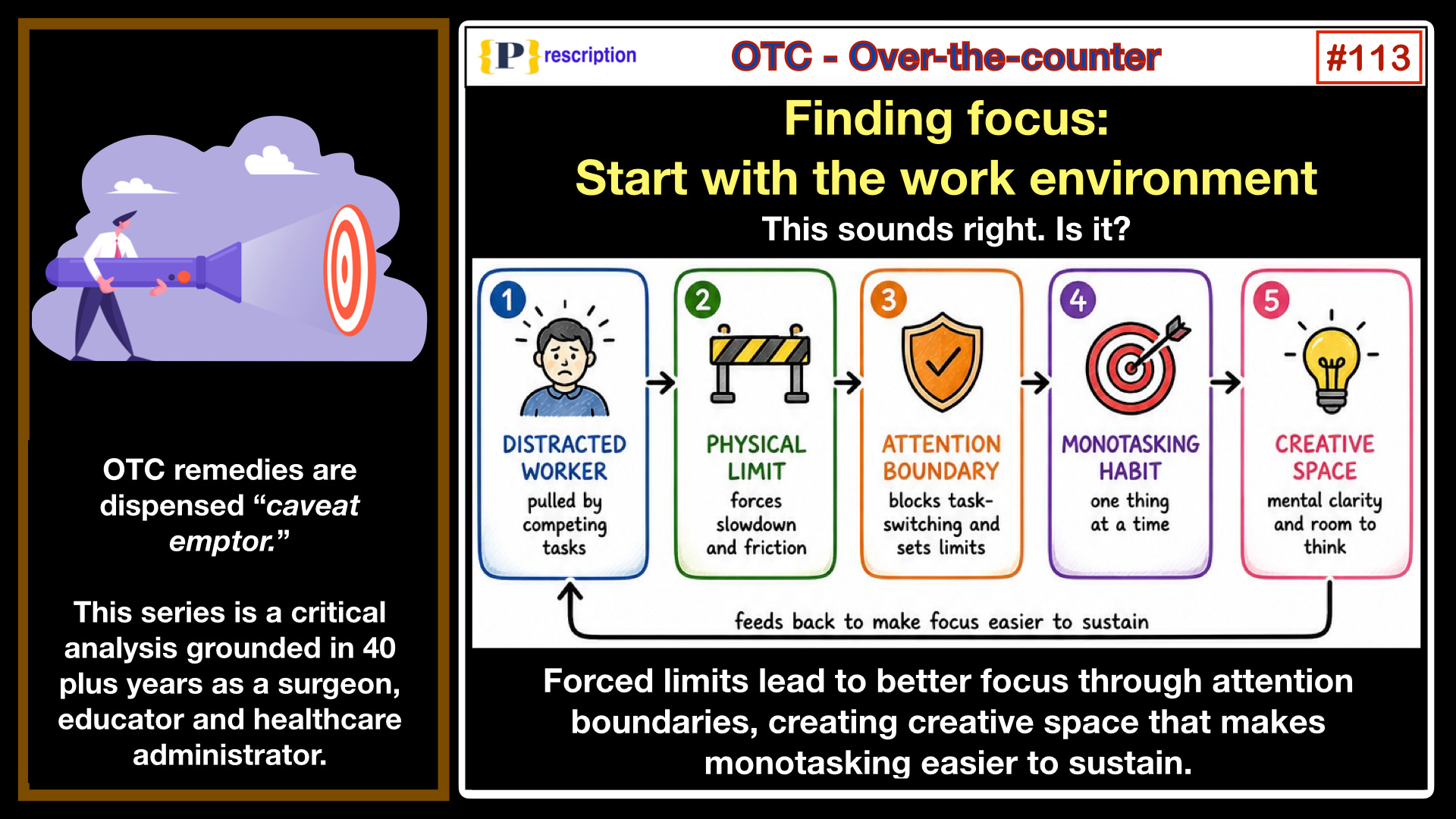
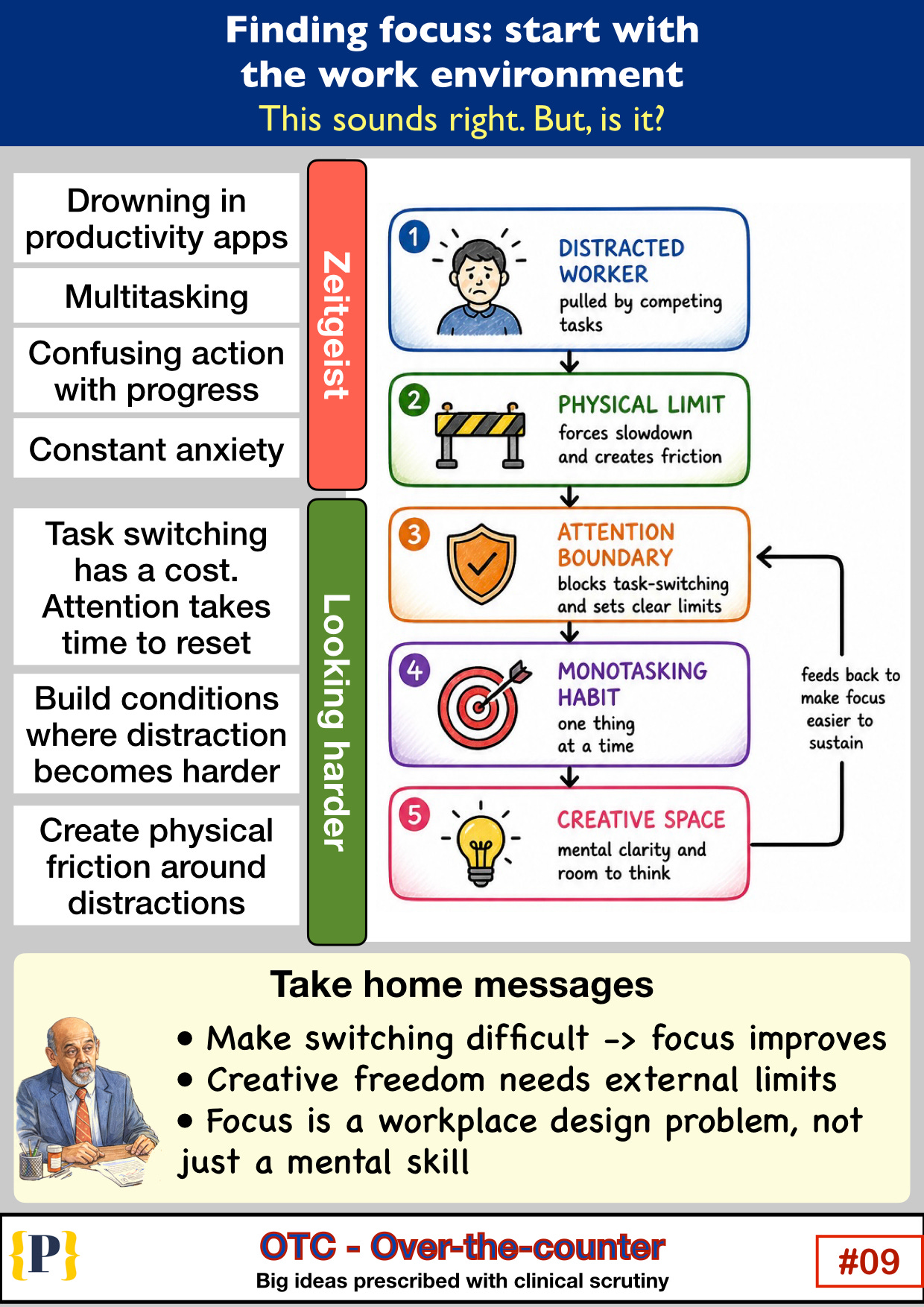
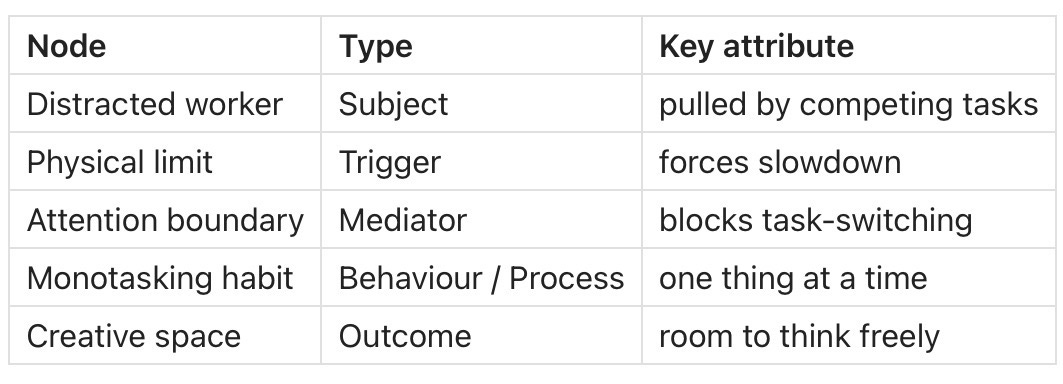
🔑 𝗞𝗘𝗬 𝗘𝗡𝗧𝗜𝗧𝗜𝗘𝗦 - 𝗮𝘁𝘁𝗿𝗶𝗯𝘂𝘁𝗲𝘀 - 𝗿𝗲𝗹𝗮𝘁𝗶𝗼𝗻𝘀𝗵𝗶𝗽𝘀
A 5-step, universally applicable framework expressed as nodes, type and attributes.
Making it work for you
Attention is not failing — the system is
Most advice targets discipline, not environment.
Constant inputs make focus structurally difficult.
Even capable people fragment under poor work flow design.
Multitasking looks productive — but isn’t
Switching breaks cognitive continuity.
Speed replaces depth without visibility.
Activity increases, but meaningful progress doesn’t.
Focus follows friction, not willpower
Limits reduce impulsive task-switching - like blinders on a race horse.
Clear boundaries stabilise attention.
Design matters more than motivation.
Better limits create better outcomes
Work systems shape how we think.
Constraints enable deeper, sustained work.
The real cost is not doing more, but doing it worse.
✅ In this regard, here’s an article worth exploring: How to Find Focus When It’s Most Elusive | Isabel Fattal, The Atlantic
💬 Summary in quotes:
“My conclusion: It wasn’t so much what I was doing as what I wasn’t doing.”
“Whether I was reading, working on my computer, or brushing my teeth, I was ‘monotasking,’ concentrating on one thing at a time.”
“Not being able to ... had the effect of forcing me to focus.”
“Multitasking is the act of distracting yourself.”
“Even modest reductions in switching pay off disproportionately in improving productivity and reducing stress.”
“The real story of creation is not about boundlessness, but boundaries.”
𝗢𝘃𝗲𝗿-𝘁𝗵𝗲-𝗰𝗼𝘂𝗻𝘁𝗲𝗿 (𝗢𝗧𝗖) by {𝘗}𝘳𝘦𝘴𝘤𝘳𝘪𝘱𝘵𝘪𝘰𝘯 is dispensed in the spirit of “𝙛𝙖𝙞𝙧 𝙪𝙨𝙚.” It is an active critique based on my 40 plus years as a surgeon, educator and healthcare administrator.


{P}rescription is free, but if you would like to show appreciation, you can make a donation at a very worthwhile cause for education of underprivileged children at diyaghar.org