


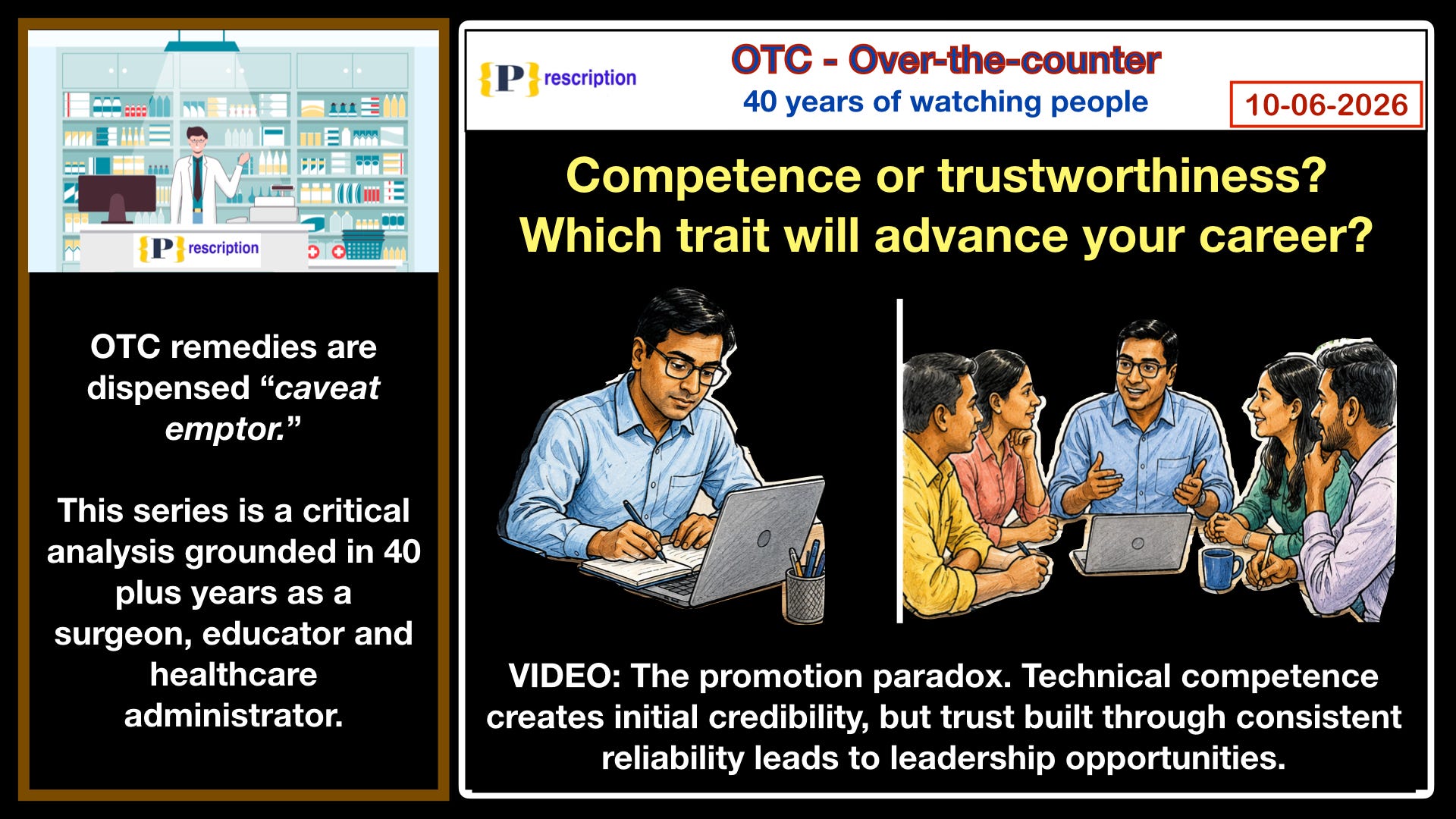
Why do some highly capable people stall while others keep moving forward?
The answer may have less to do with talent than with trust.
1. THE COMPETENCE TRAP
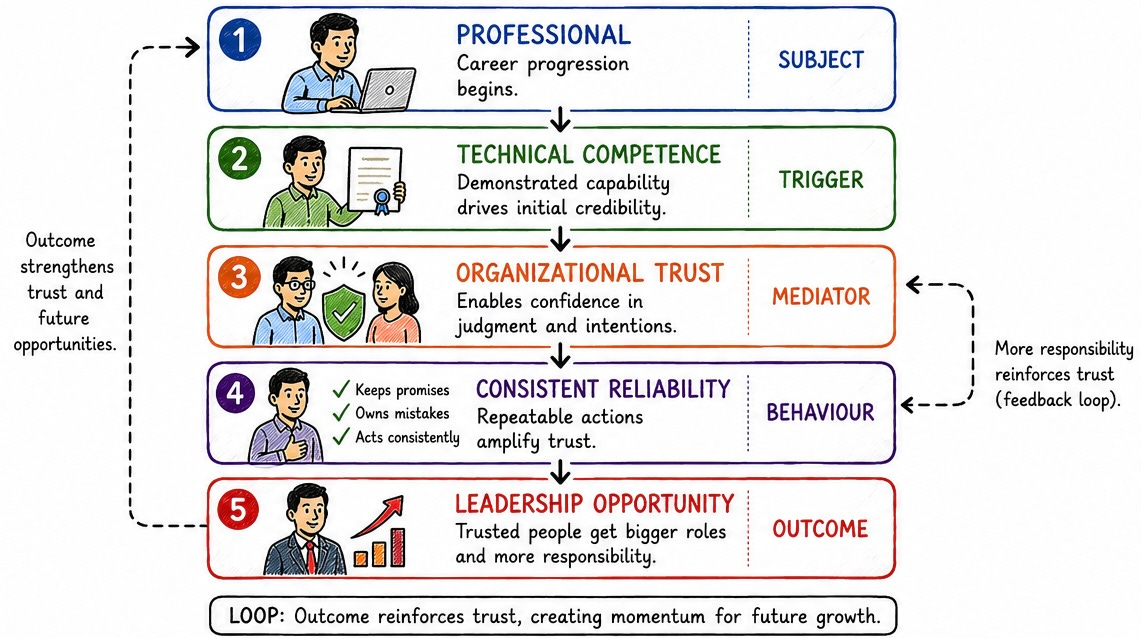
Early careers reward expertise, credentials, and technical performance.
As organisations become more complex, leaders face uncertainty rather than neat, textbook problems.
Being the smartest person in the room becomes less important than being the person others can depend on for help and to get the job done.
2. TRUST IS BUILT IN SMALL MOMENTS
Trust rarely comes from a single achievement; it accumulates through repeated interactions. Credibility builds over time by:
Keeping promises,
Owning mistakes, and
Communicating clearly.
Organisations promote people into areas of potential risk. Trust buffers perceived risk.
3. THE FUTURE OF LEADERSHIP
AI and automation will steadily level the playing field for technical knowledge.
Human judgment, reliability, and relationship-building will become strong differentiators.
Professionals who thrive will be those who combine expertise with predictability and integrity.
4. AN EXPERIMENT WORTH TRYING
Audit your professional reputation: Are you known for capability, trustworthiness, or both?
Focus on consistency in small commitments before pursuing larger responsibilities.
Measure success not only by what you accomplish, but by how many people would confidently trust you with something important.
Trust is one of the few career assets that compounds indefinitely.
{P}rescription is free, but if you would like to show appreciation, you can make a donation at a very worthwhile cause for education of underprivileged children at diyaghar.org


